Monthly Archives: May 2024

Boots on the ground, eyes on the sky

The Glossy Squad is helping save a rare cockatoo
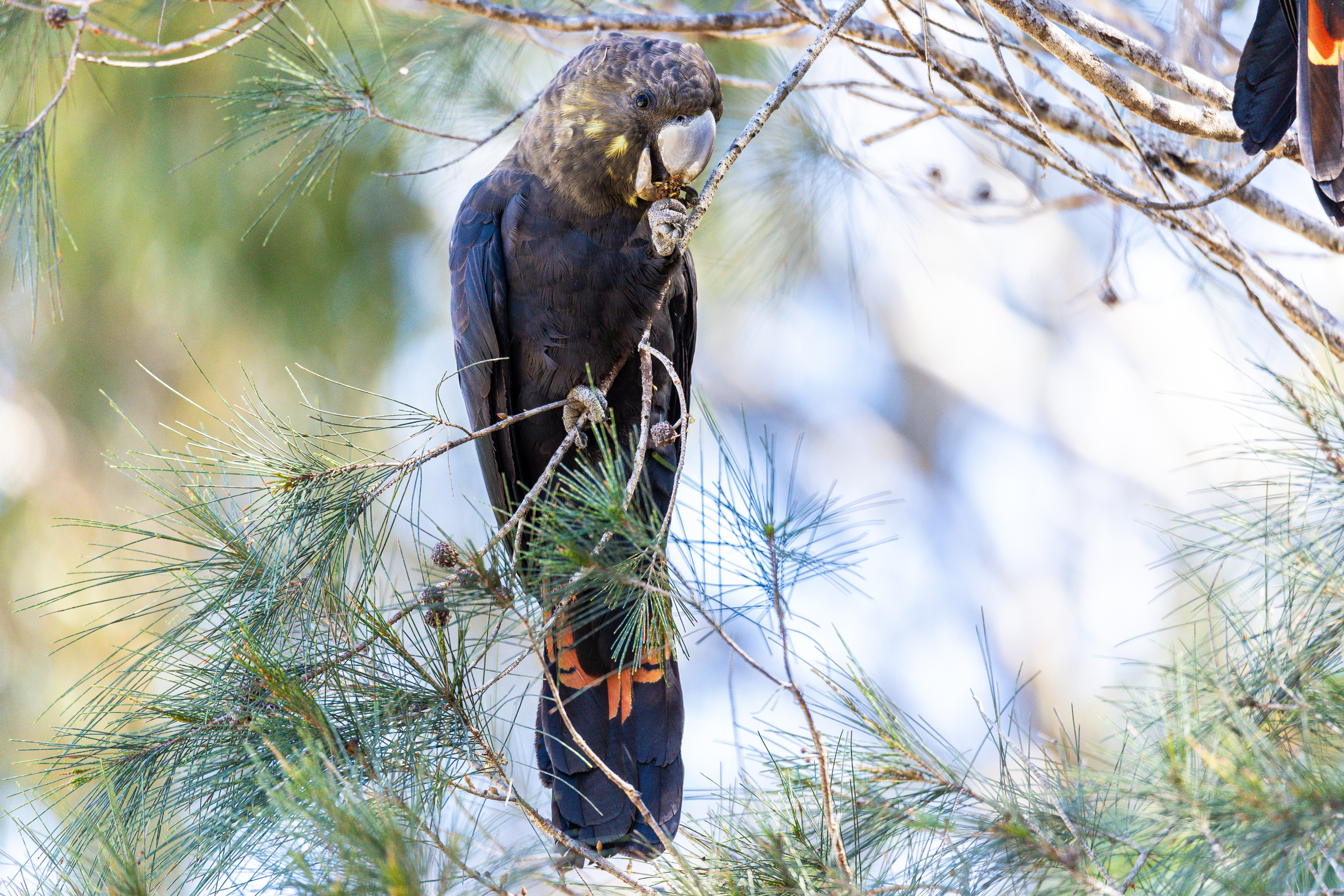
Female glossy cockatoo from Urunga. Photo by Alex Pike.

A lingering effect of the 2019 bushfires is their slow-burn impact on wildlife.

The green abundance as plants regenerate looks heartening, but nesting hollows for large birds can take more than a century to develop in a badly burnt landscape.

That’s why a NSW government conservation project is investigating how one of Australia’s most threatened cockatoo species is faring on the Mid North Coast.

Called Biliirrgan, the Gumbaynggir word for glossy black cockatoo, a key part of the project is the Glossy Squad, citizen scientists from the Nambucca, Bellingen, Coffs Harbour and Clarence districts.

Senior Threatened Species Officer Brian Hawkins said the volunteers spent over 1000 hours last year trying to spot where the birds were feeding, drinking and nesting.

Glossies are the only black cockatoo with red tails in northern NSW. Females have irregular yellow markings on their heads. They feed almost exclusively on she-oak seeds but will nest in any large tree with a suitable hollow.

Three breeding sites were found locally – in Kalang, Dundurrabin and Sawtell – and sound recording equipment established that a fledgling was successfully raised by the Kalang and Dundurrabin pairs.

The female glossy lays one egg in a vertical tree hollow and incubates it for a month. Her mate brings her food and water each day.

“He arrives and she comes out and he’ll give her a drink as well as a feed,” Dr Hawkins said. “Or sometimes he’ll come and sort of pick her up and they’ll go and have a drink together.”

Finding nest sites is crucial not only for establishing whether the birds are breeding successfully, but also because it means the area can be protected.

“Late last year, in the lead up to the fire season, we went and raked around that tree [in Kalang] so that if a fire came through, hopefully it wouldn’t reach the nest tree,” Dr Hawkins said.

About 10 glossies are under observation in the Promised Land and 20 regularly visit a particular puddle of water in Urunga, but no nesting sites have been found.

“We did so much monitoring of them [the Urunga birds] that we’re confident that they didn’t breed last year,” Dr Hawkins said. “We’ll be putting up some artificial hollows that have been specially designed for glossy blacks and 3D printed out of recycled plastic and fire-retardant material.”

Females have distinctive patterning on their heads, so another important part of the project is building up a photographic database identifying individual birds.

The plan is to then use specialised artificial intelligence software to match these mug shots to photos submitted by people in the field, to help track the birds’ movements. 

To report sightings of glossy black cockatoos, go to the survey link https://arcg.is/14T50C

Published in the Bellinger Valley Herald, 5 May 2024
Bellingen Agricultural Show through the years

Bellingen celebrated the jubilee of its agricultural show in 1933 – two years late.

​The Bellinger River Agricultural Society promoted the 50-year anniversary of its show with great enthusiasm in 1933, even though no one was quite sure if it had begun in 1883 or not.

The local paper acknowledged there was some doubt.

“No Definite Record of Exact Date, but the Society was Established 50 or More Years Ago,” a headline in the Northern Courier on 28 March 1933 said.

These days, with many old newspapers digitised on trove.nla.gov.au, we know the first show was held in George Tyson’s paddock at Fernmount on 28 April 1881.

That’s impressively early, given that settlers had only started arriving 20 years beforehand. Coffs Harbour’s show didn’t start until 1914. In fact, Bellingen’s show was a first for the whole region from the Hunter to the Clarence. People travelled two or three days along rough tracks to attend, and some came from Sydney by boat.

The Clarence and Richmond Examiner of 16 May 1881 reported that:

“Upwards of 500 people were in attendance, being admitted to the grounds at the nominal fee of 6d. The ground presented a very lively appearance, being profusely decorated with a supply of bunting, which floated in the breeze, besides which the committee availed themselves of the services of a brass band. A booth was on the ground, with viands and a sumptuous repast to satisfy the cravings of the inner man, and judging by appearances was very well patronised.

“An untenanted dwelling was made use of for the purpose of displaying to view indoor exhibits and perishable goods, such as fruits, vegetables, fancy work, &c …

“Nine horses tried their respective merits at the jumps. The jumping was not good, 3 feet 7 inches being only cleared, the prize falling to a local competitor … The cattle sections were very poorly represented, there being only two or three milkers and a pair of working bullocks …

“The exhibits of vegetables, fruit, and maize were all very good, though not numerous. The maize exhibited, grown by Mr J. Walker, was an exceedingly fine sample, and grown, I believe, from seed procured from the Hawkesbury … Mr Marx exhibited tea and coffee plants, which, by their healthy appearance, are evidently well adapted for culture in this district. He also showed wine from his well-known vineyard. I also noticed some rice plants … 

“There were also some very good specimens of needle and fancy work, exhibited by children from the various schools in the district …”

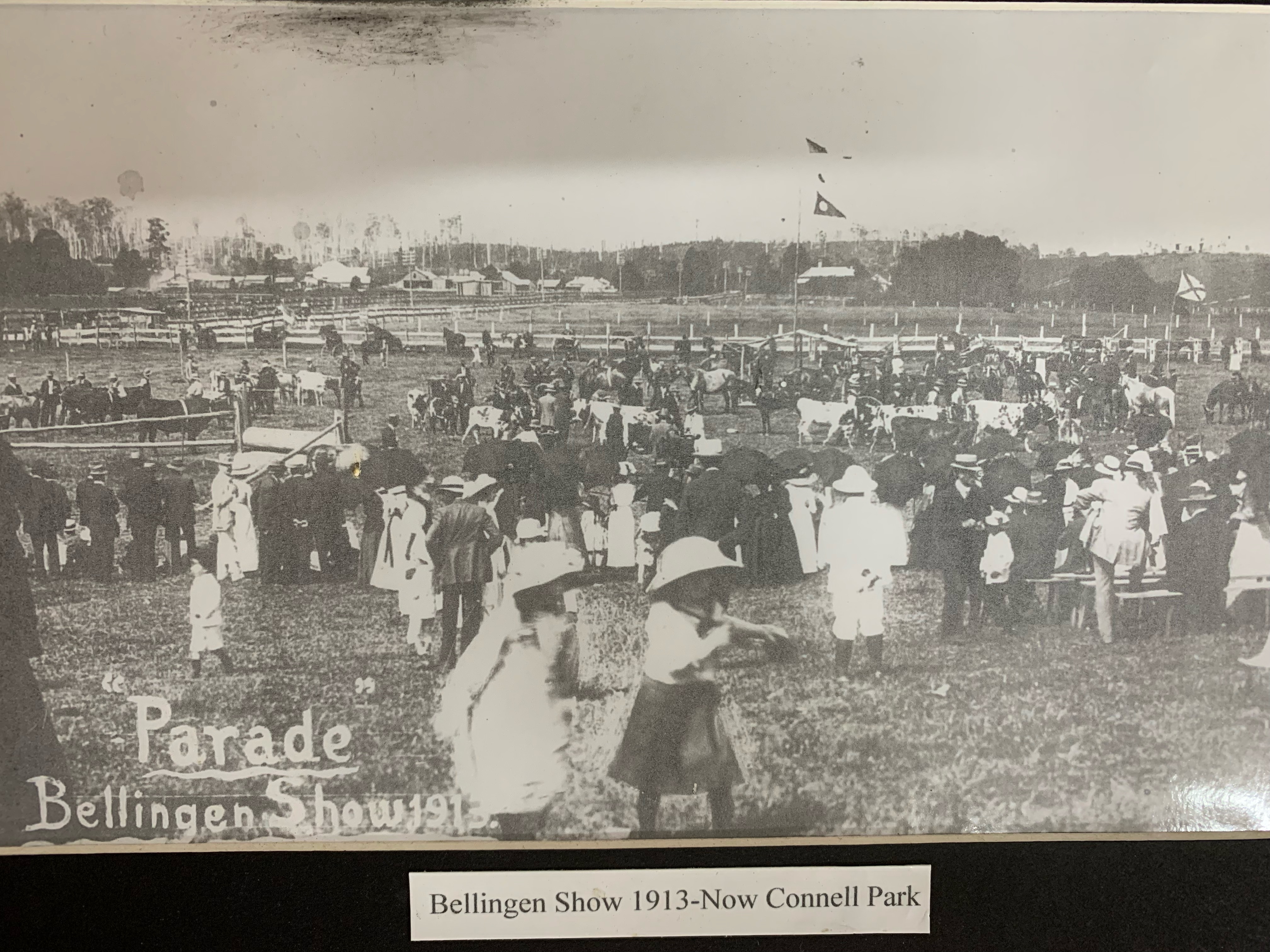
The show moved from Fernmount to Marx Hill before folding during the 1890s Depression. From 1904 it was held at McNally’s farm, which is now Connell Park. 

In 1910, land for the current showground was purchased in North Bellingen, and the 11th show was held there on 5 March 1914. Unfortunately, the weather was very poor and so was attendance.

“Heavy rain militated against a large attendance, and owing to the bad state of the roads and the swollen streams a large number of the entries were not presented,” the Raleigh Sun of 13 March 1914 said.

World wars, the 2009 flood and the 2020 pandemic are the only things that have stopped the hardworking Bellinger River Agricultural Society volunteers from staging the show every year since then.

Published in the Bellinger Valley Herald, 5 May 2024