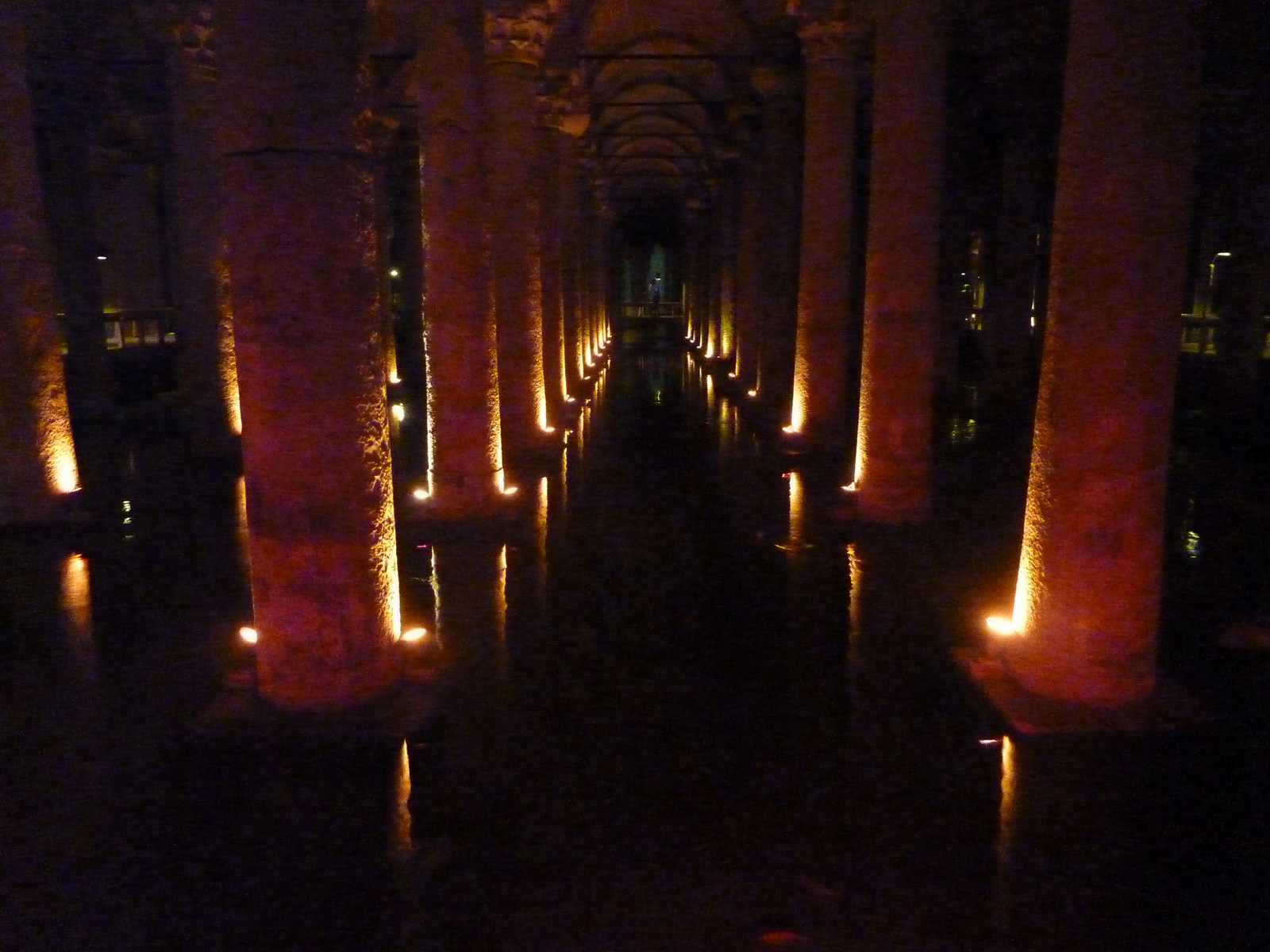
An eerie place of shadowy, serried columns, the Basilica Cistern is an underground water storage chamber the size of a cathedral. It was constructed in 523 AD, during the reign of Byzantine emperor Justinian, using marble columns, capitals and plinths from ruined buildings, including a couple of Roman-era Medusa heads installed sideways and upside down respectively. It once held 80,000 cubic metres of water, pumped through aqueducts from the Belgrade Forest 19km north of the city. The cistern is 65m wide and 143m long, and its roof is supported by 336 columns arranged in 12 rows. These days, the water is only a metre or so deep, but it still has the fish.
Eventually closed, it seemed to have been forgotten by the city authorities until scholar Petrus Gyllius, who was researching Byzantine antiquities in 1545, was told by locals that they could obtain water by lowering buckets in their basement floors. Some were even catching fish this way. Intrigued, Gyllius explored the neighbourhood and discovered a house through whose basement he accessed the cistern.
 Janene Carey